 Practices
Sacral Chakra: Healing Emotions, Creativity and Joy

The Sacral chakra, or Svadhisthana, is linked with emotions, creativity, pleasure and joy. Here is a complete guide: its meaning, signs it may need care, what research says, ancient wisdom, an 8-minute practice and simple affirmations.
What is the Sacral chakra? The Sacral chakra, or Svadhisthana, is the second Energy Centre in yoga, just below the navel in the lower belly. It is linked with emotions, creativity, pleasure and joy. When it feels balanced, feelings flow and life feels colourful. When it needs care, we may feel numb and flat, or flooded by emotions.
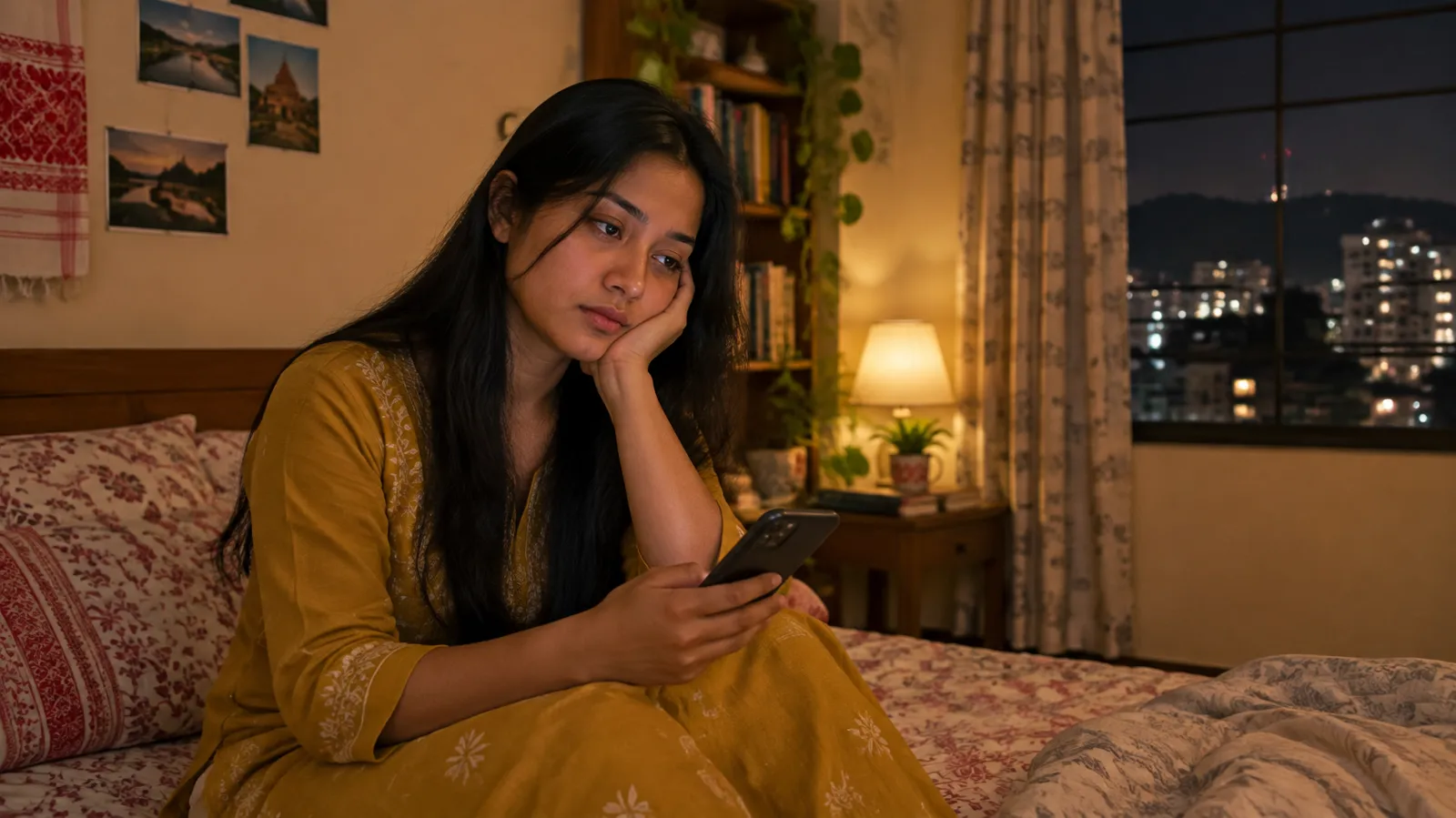
Do you sometimes feel flat, as if life has lost its colour? You go to work, you cook, you reply to messages, but nothing feels juicy any more. Or perhaps the opposite: your emotions feel like a flood. One small comment and you are in tears, or angry, and you don't know why.
In the chakra tradition, both of these may point to the second Energy Centre, the Sacral chakra. In this complete guide, I'll explain what it is, the signs it may need care, what modern research says about emotions, creativity and joy, what ancient texts say, and a simple 8-minute practice for sacral chakra healing.
If you haven't read it yet, start with my guide to the first Energy Centre, the Root chakra. Safety comes first. Once we feel safe, feelings can start to flow.
What is the Sacral chakra?
The Sacral chakra is the second of the seven main Energy Centres in yogic and tantric tradition. Its Sanskrit name is Svadhisthana, often translated as "one's own place" or "the seat of the self". It is linked with emotions, pleasure, creativity, relationships and the flow of life.

Here are its traditional associations at a glance:
- Sanskrit name: Svadhisthana
- Location: the lower belly, about two to three fingers below the navel, in the area of the pelvis and sacrum
- Element: water (jala)
- Colour: orange in most modern teaching; classical texts describe a vermilion lotus
- Petals: six
- Seed sound (bija mantra): "Vam"
- Themes: feelings, pleasure, creativity, intimacy, flexibility, joy
- Body areas often linked: lower belly, hips, lower back and pelvic organs
A simple way to remember it: the Root chakra asks, "Am I safe?" The Sacral chakra asks, "Can I feel? Can I enjoy? Can I create?"
What the Sacral chakra is not
Let me be clear as a doctor and gynaecologist. Chakras are a spiritual and energetic map, not organs that can be seen on a scan. Science has not proven that chakras exist in the body. I find the map very useful for understanding our emotional life, and I use it that way.
So if you have pelvic pain, period problems, fertility worries, urinary symptoms or lower back pain, please see a doctor first. Energy work can sit beside medical care, but never in place of it.
Your inner river
Think of a river. A healthy river flows. It is clear, alive and full of fish. It changes with the seasons, rising in the monsoon and quieter in summer, but it keeps moving.
Now imagine the same river is dammed. Behind the wall, water collects and becomes still and murky. Nothing new comes in. Or the opposite: the river floods its banks, breaks the fields and destroys homes.
Our emotions behave like water. When they flow, we feel alive, creative and connected. When we block them for years ("Don't cry", "Don't be so sensitive", "Good girls don't get angry"), they become a stagnant pond. And when we have held them back too long, they sometimes burst out as a flood.
Sacral healing is not about stopping the water. It is about letting it flow again, gently, within healthy banks.
Signs your Sacral chakra may need care
Read these slowly and notice which ones feel familiar. These are reflection questions, not a diagnosis.
When the energy feels blocked or too low:
- You feel numb, bored or "flat", even when good things happen.
- You find it hard to cry, or hard to name what you feel.
- You have stopped doing things that once gave you joy: music, dance, art, cooking, playing.
- You feel guilty when you rest or enjoy something just for yourself.
- You feel stiff in the hips and lower back, and stiff in your thinking too.
- You feel shy or uncomfortable about pleasure, touch or intimacy.
When the energy feels too high or flooded:
- Your emotions swing quickly from high to low.
- You depend on others' moods, or on drama, to feel alive.
- You look for comfort in too much food, shopping, scrolling or sweets.
- You find it hard to keep healthy boundaries in relationships.
When it feels balanced:
- You can feel your emotions fully, and let them pass.
- You enjoy simple pleasures without guilt.
- Creative ideas come easily, in work, cooking, dressing or problem-solving.
- You feel comfortable in your body and in close relationships.
- You can change plans and go with the flow, without losing yourself.
Imagine a young chartered accountant in Pune. She is excellent at her job, but she hasn't painted, danced or even listened to her favourite songs in two years. "There is no time," she says. On Sunday afternoons she feels strangely empty and irritable. Nothing is "wrong", but her river has slowed to a trickle.
Why so many of us block our feelings
Many of us, especially women, learn early that feelings are a problem. Tears are "drama". Anger is "bad manners". Pleasure is "selfish". Creativity is "a hobby, not a career". So we become good, responsible and busy, and slowly lose touch with our inner water.
There is also a quieter reason. Feelings can be scary when we never learned what to do with them. If no one helped us name sadness, or stayed with us while we cried, we learned to shut the tap. That worked for a while. But over years, the shut tap makes life feel dry.
The good news: we can learn to open it again, slowly and safely.
What modern research says
Science doesn't measure chakras. But it has studied the themes of the Sacral chakra, such as feelings, movement, creativity and women's emotional health, and the findings are encouraging:
- Naming a feeling calms the brain. In a brain-scan study, people looked at pictures of angry or scared faces. When they simply chose a word for the emotion, such as "angry", the amygdala, the brain's alarm centre, became less active than when they just looked or matched faces by gender. A calming area in the front of the brain became more active (Lieberman et al., 2007). It was a small lab study, but this "name it to tame it" effect has been studied many times since.
- Dance and movement lift mood. A meta-analysis of 41 controlled studies with 2,374 people found that dance movement therapy reduced depression and anxiety and improved quality of life, with a medium overall effect. The authors noted that many studies had weaknesses, and results varied (Koch et al., 2019).
- Small creative acts help you flourish. In a 13-day diary study, 658 young adults reported each day how much time they spent on creative activities, such as writing, music, art or creative cooking. On the day after a more creative day than usual, they felt more energetic positive emotions and a greater sense of flourishing (Conner et al., 2018). It was not a trial, so it shows a link, not proof.
- Indian research: yoga in pregnancy. At PGIMER, Chandigarh, 100 pregnant women were randomly assigned to online prenatal yoga or usual care. The 77 women who completed the study showed that the yoga group had less perceived stress, anxiety and depression and better quality of life, while these got worse in the usual-care group (Nadholta et al., 2023).
- Indian research: yoga for premenstrual symptoms. In a small pilot trial registered in India, 36 women with premenstrual syndrome did yoga, Pilates or nothing for six weeks. Both yoga and Pilates reduced depression, anxiety and stress, with yoga showing the widest improvements (Ranga et al., 2026). With only 12 women per group, this is an early signal, not proof.
So research can't prove a Sacral chakra. But it supports what Sacral work uses: naming feelings, moving the hips and body, doing small creative things and caring for women's emotional health with gentle yoga.

What ancient wisdom says
The classic text on the chakras, the Ṣaṭ-Cakra-Nirūpaṇa (written by Purnananda in the 16th century), describes Svadhisthana as a six-petalled lotus at the root of the genitals, with the white crescent moon and the seed sound of the water element, "Vam" (Ṣaṭ-Cakra-Nirūpaṇa, verses 14 to 18). The text says that meditating on this lotus frees a person from inner enemies such as lust, anger and greed, and makes their words flow like nectar. (Checked against Arthur Avalon's translation, The Serpent Power.)
Notice the idea: the same energy that can pull us into craving and anger can also become sweetness and creativity when it is understood.
The Bhagavad Gita gives a beautiful picture of emotional balance using water:
Āpūryamāṇam achala-pratiṣhṭhaṁ samudram āpaḥ praviśhanti yadvat, tadvat kāmā yaṁ praviśhanti sarve sa śhāntim āpnoti na kāma-kāmī. (Bhagavad Gita 2.70)
My simple meaning: just as rivers keep flowing into the ocean, yet the ocean stays full and steady, the person who lets desires flow in without being shaken by them finds peace, not the one who keeps chasing desires. (Checked against standard English translations.)
The Gita doesn't say, "Stop all desire." The ocean still receives every river. It says, become big enough to hold it.
There is also a beloved story from the Ramayana. King Bhagiratha prayed for years to bring the holy river Ganga down from heaven to the earth. But Ganga's force was so great that the earth would have been shattered. So Lord Shiva stood beneath her and caught the mighty river in his matted hair. Inside his locks, her force softened, and she came down gently in streams to bless the land (Valmiki Ramayana, Bala Kanda, chapters 42 to 44).
Our emotions are a little like Ganga. They are sacred and powerful. Pushed away, they can't bless us. Released all at once, they can flood. Sacral healing is learning to be our own Shiva: holding our feelings with enough awareness that they can flow gently and nourish our life.
This wisdom comes from Indian traditions and is open to people of every faith, or none.
An 8-minute Flowing Water practice
This is the one practice for this post. Do it standing, in loose clothes, ideally once a day. If you are pregnant, have had recent surgery or have hip or back problems, keep the movements very small or do only steps 1, 3 and 4 while seated.
- Settle (1 minute). Stand with your feet hip-width apart and knees soft. Place both hands on your lower belly, below the navel. Breathe slowly into your hands, letting the belly rise and fall.
- Hip circles (2 minutes). Keeping your hands there, slowly circle your hips, like stirring water in a large pot. Make 8 circles one way and 8 the other. Let the movement be soft and fluid, not perfect. Notice any stiffness without judging it.
- Name the feeling (1 minute). Stand still. Ask your belly, "What am I feeling right now?" Wait. Name it in one or two words: "tired", "sad", "excited", "lonely", "nothing". "Nothing" is also an answer. Just say it softly: "I feel ___, and that's okay."
- Chant "Vam" (2 minutes). Breathe in. On the out-breath, chant "Vam" slowly, like "vaaammm", feeling the gentle vibration in the lower belly. Repeat about 8 to 10 times. Then sit quietly for a few breaths.
- Imagine the water (1 minute). With eyes closed, picture a warm, glowing orange light in your lower belly, like sunset on a calm river. Imagine it flowing gently through your hips, legs and whole body.
- One small joy (1 minute). Before you open your eyes, choose one small joyful or creative thing you will do today. Play one song and sway to it. Doodle for 5 minutes. Cook with a new spice. Wear a colour you love. Then open your eyes and do it today.
Over days and weeks, this practice teaches your body that feelings are safe to feel, and that joy is allowed.
Sacral chakra affirmations
Say these slowly, with one hand on your lower belly. Choose the two or three that feel most true, or most needed.
- I allow my feelings to flow, and I let them pass.
- It is safe for me to feel.
- I deserve to enjoy my life.
- My creativity flows freely.
- I welcome pleasure and joy without guilt.
- I honour my body and its wisdom.
- I can go with the flow and still stay myself.
If an affirmation feels false, soften it: "I am learning to enjoy my life." Affirmations work best when the feeling underneath is heard first.
Small daily habits for a healthy Sacral chakra
- Move your hips. Dance to one song a day, do gentle hip-opening yoga such as butterfly pose (Baddha Konasana) and child's pose, or simply walk with relaxed hips.
- Spend time near water. Sit by a lake, river or the sea, or take a slow warm bath or shower, paying attention to the water.
- Drink enough water. A simple, physical way to honour your water element.
- Make something every week. Draw, write, sing, garden, decorate, cook something new. It doesn't have to be good. It only has to be yours.
- Name one feeling every evening. Write one line in a diary: "Today I felt ___ when ___."
- Enjoy without guilt. Have a cup of tea slowly, without your phone. Let it be enough.
- Choose warm orange foods and colours sometimes. Oranges, papaya, carrots, pumpkin, or an orange dupatta or scarf. It is a playful reminder, not a medical rule.
If your energy feels low in general, my post on how to raise your vibration has 7 simple habits that pair well with Sacral work.
Common mistakes in Sacral healing
- Forcing a big emotional release. Healing doesn't need dramatic crying every day. Small, steady flow is safer and kinder.
- Confusing pleasure with escape. A slow, enjoyed meal nourishes the Sacral chakra. Eating a whole packet of biscuits to avoid a feeling does not.
- Skipping the Root. If you don't feel safe, opening up emotions can feel overwhelming. Ground first, then flow.
- Judging your creativity. "I'm not creative" usually means "I was told my drawings weren't good enough". Everyone is creative in some way.
- Ignoring real medical signs. Pelvic pain, heavy periods or hormonal problems need a doctor, along with any energy work.
For a gentle overview of all seven Energy Centres and a meditation that covers them all, read my chakra healing for beginners guide.
What changes when your Sacral chakra flows
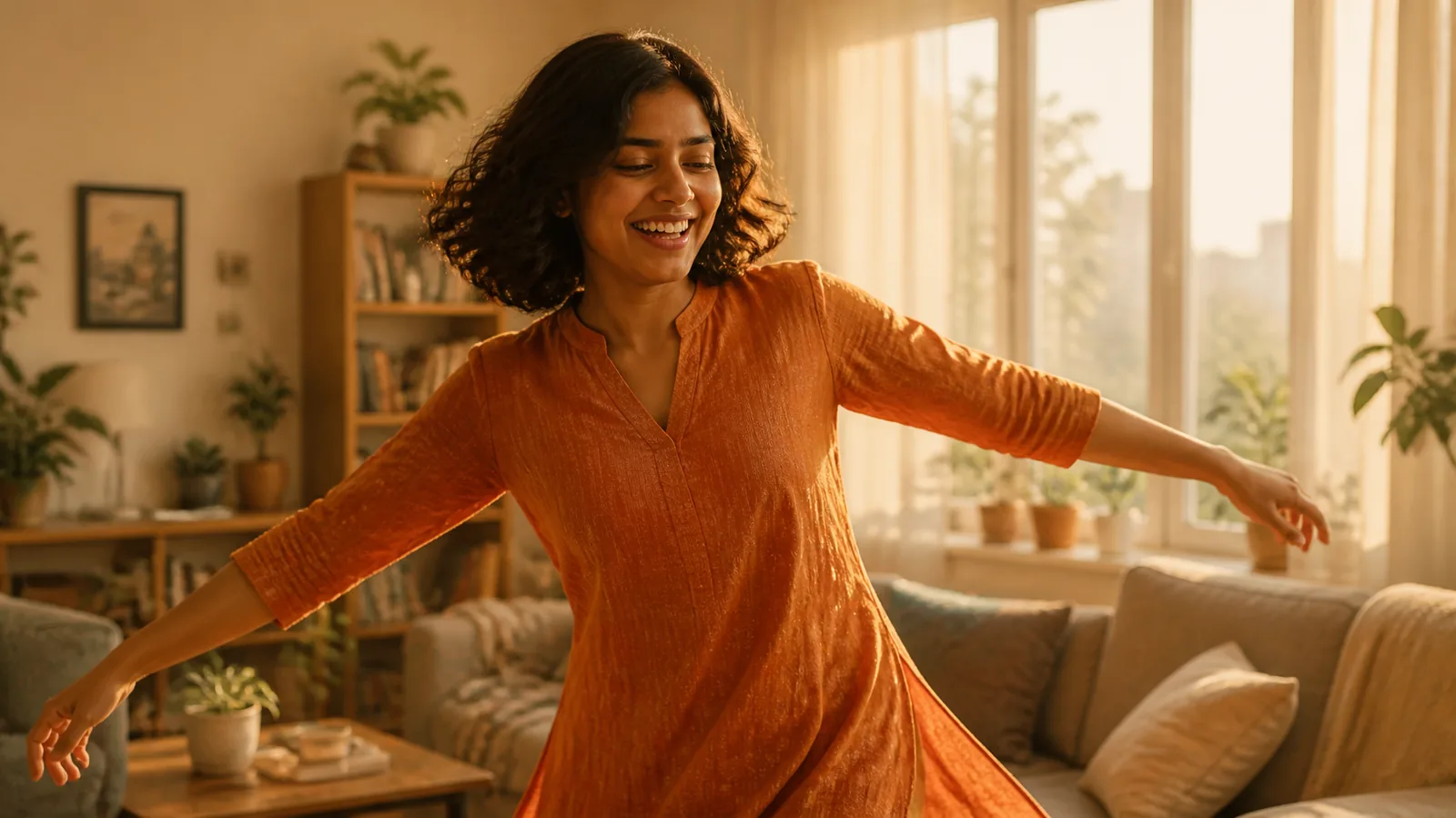
People who care for this Energy Centre regularly often notice that:
- they feel more alive and more like themselves;
- they cry, laugh and feel more easily, and recover faster;
- old hobbies and new ideas come back;
- they enjoy small moments without guilt;
- relationships feel warmer and more honest.
There is no fixed timeline. Some feel a shift in days, others over months. But a river that starts to flow again always brings life to its banks.
Want to go deeper into all seven Energy Centres?
I have written a book, 7 Chakras, 7 Keys to Happiness, a simple guide to all seven Energy Centres with practices you can use every day. Get the book here.
References
- Lieberman MD, Eisenberger NI, Crockett MJ, et al. (2007). Putting feelings into words: affect labeling disrupts amygdala activity in response to affective stimuli. Psychological Science, 18(5), 421-428. View study
- Koch SC, Riege RFF, Tisborn K, et al. (2019). Effects of dance movement therapy and dance on health-related psychological outcomes: a meta-analysis update. Frontiers in Psychology, 10, 1806. View study
- Conner TS, DeYoung CG, Silvia PJ (2018). Everyday creative activity as a path to flourishing. The Journal of Positive Psychology, 13(2), 181-189. View study
- Nadholta P, Kumar K, Saha PK, et al. (2023). Mind-body practice as a primer to maintain psychological health among pregnant women: YOGESTA, a randomized controlled trial. Frontiers in Public Health. View study
- Ranga M, et al. (2026). Effect of yoga therapy and Pilates training in the management of premenstrual syndrome: a pilot randomised controlled trial. Comparative Exercise Physiology. View study
- Purnananda, Ṣaṭ-Cakra-Nirūpaṇa, verses 14-18 (tr. Arthur Avalon, The Serpent Power).
- Bhagavad Gita 2.70.
- Valmiki Ramayana, Bala Kanda, chapters 42-44 (descent of Ganga).
This article is for general wellness and education only. Chakras are a spiritual map, not a medical diagnosis. If you have pelvic pain, period, fertility or urinary symptoms, please see a doctor. If low mood lasts for weeks or affects your daily life, please speak to a doctor or mental health professional; in India you can call Tele-MANAS on 14416. Read the full Medical & Wellness Disclaimer.
Frequently asked questions
What is the Sacral chakra?
The Sacral chakra, or Svadhisthana, is the second of the seven main Energy Centres. It is located in the lower belly, below the navel, and is linked with water, emotions, pleasure, creativity and relationships.
What are the signs of a blocked Sacral chakra?
Common signs include feeling emotionally numb or flat, difficulty naming or expressing feelings, loss of creativity and joy, guilt about pleasure, and stiffness in the hips. Some people feel the opposite: emotional swings and comfort-seeking through food or shopping.
How can I heal my Sacral chakra?
Gentle hip movement, naming your feelings, chanting the seed sound "Vam", spending time near water and doing small creative activities are simple ways to begin. Practise regularly, and ground yourself with Root chakra work first.
What is the mantra for the Sacral chakra?
The seed sound, or bija mantra, of the Sacral chakra is "Vam". Chant it slowly on the out-breath while focusing on your lower belly.
What colour is the Sacral chakra?
Most modern teachers use orange. Classical texts such as the Ṣaṭ-Cakra-Nirūpaṇa describe a vermilion lotus with a white crescent moon.
Can chakra healing treat period or pelvic problems?
No. Chakra practices are for emotional and spiritual wellbeing. Pelvic pain, period problems or fertility concerns need a doctor's care. Energy work can support you alongside medical treatment.
Start today
Put one hand on your lower belly right now. Take three slow breaths and ask, "What am I feeling?" Name it in one word. Then play one song you love and let your hips move. That is your first step in Sacral healing.
Did this post help you? Share your thoughts, ask me a question or connect with me on WhatsApp.
Want clarity on your own block? Book a free 1:1 Clarity Call.
This post is for education and emotional wellbeing. It is not medical advice. Read the Medical & Wellness Disclaimer.