 Manifestation
Manifesting Money but Nothing Is Changing?
You write the affirmations, you visualise, you wish hard, and still the money does not move. Here is the hidden reason, and a simple way to change your money frequency this Diwali.
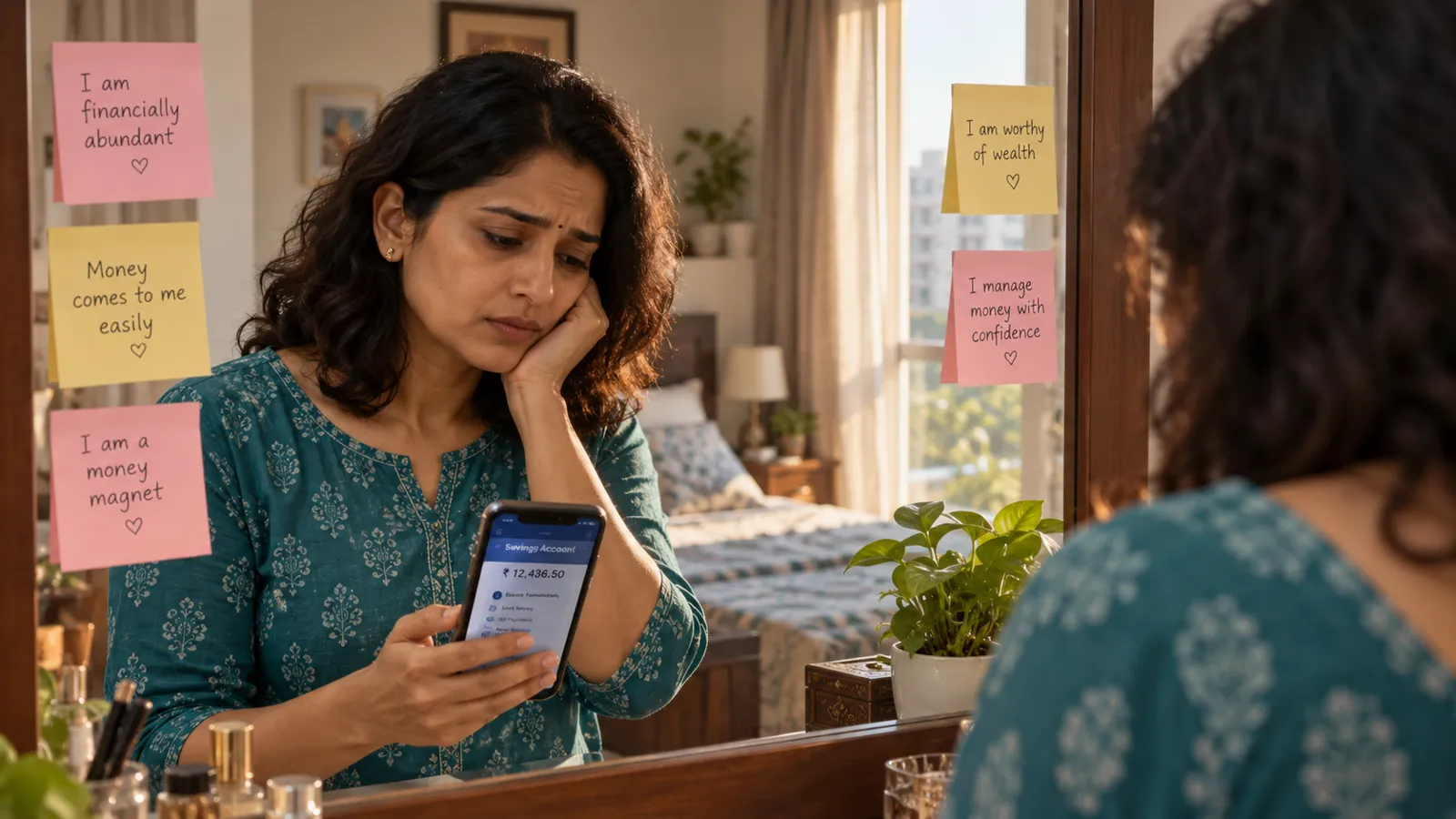
You have written the affirmations. You have made the vision board. You have watched the videos about manifesting money and said "I am a money magnet" a hundred times. And still, at the end of the month, nothing has really changed.
If this is you, please don't feel you are doing it wrong or that manifestation is not for you. In my work with people, I see this again and again. The problem is rarely the method. It is what is happening underneath it.
In this post, let us look at why manifesting money often doesn't work, what "money frequency" really means, and one simple practice you can start this Diwali.
Why is manifesting money not working?
Manifesting money often doesn't work because your words and your feelings don't match. You may say "I am abundant" in the morning, but feel fear, guilt or scarcity about money all day. Your actions usually follow those feelings, not the words. Heal the feeling first, and the words begin to feel true.
Imagine you say "I am rich and abundant" every morning. But every time you open your banking app, your stomach tightens. Every time you spend on yourself, you feel guilty. Every time someone offers to pay, you say "No, no, I'll pay."
Which message is louder: the one sentence you say in the morning, or the feelings you live with all day?
Our words say one thing. Our old beliefs and feelings say another. That is why an affirmation alone often feels empty. It is like painting a wall that has a crack. The paint looks nice for a few days, but the crack shows through again. I have written more about this in my post on why money affirmations don't work.
What does "money frequency" really mean?
Money frequency is a spiritual way of describing something very practical: the feelings and beliefs you carry about money, every day.
If your money frequency is low, money feels like stress, struggle, fear or guilt. If it is high, money feels like safety, ease, gratitude and flow.
I am not talking about magic or a scientific frequency here. I am talking about your inner state, because your inner state shapes your choices. When you feel scarce, you hold back, you undercharge, you avoid looking at your accounts, and you say no to opportunities. When you feel safe and grateful, you think more clearly, ask for what you deserve, and act with confidence.
The NHS describes how money worries and mental health can feed each other: worrying about money can bring anxiety, low mood and poor sleep, and these in turn can make money harder to manage. That is the cycle many of us live in.
5 signs your money frequency is low
Ask yourself gently:
- Do you feel anxious when you check your bank balance?
- Do you feel guilty after spending on yourself, even small amounts?
- Do you find it hard to accept a gift, a compliment or help?
- Do you often say "we can't afford it" before even checking?
- Do you worry about the future even when today is fine?
If you said yes to two or more, your manifestation may be fighting against an old feeling. That is not a failure. It is simply where the real work begins.
Where these money feelings come from
Most of us learnt our money feelings long before we earned our first rupee.
We watched how our parents spoke about money, or didn't. We heard "Paise ped par nahin ugte" (money doesn't grow on trees). We saw who spent and who saved, who felt guilty and who felt proud. A child doesn't understand bank accounts, but a child understands tension in the room.
Imagine a boy who sees his father go quiet every time school fees are due. He grows up, earns well, and still feels a tight knot every time a big bill arrives, even when the money is there.
I have written more about these early beliefs in my post on 5 hidden beliefs that keep money away.
What I learnt from my own money fear
I will be honest with you.
Until a few years ago, even while I was earning well and managing money, I carried a deep fear: "What will happen in old age, when I can't earn anymore, and I am alone with no money left?" No affirmation could reach that fear, because I wasn't even aware of how strongly it was running me.
Only when I began to heal that fear did something shift. Today, I remind myself: "I am enough. I have enough. I will have enough." And this time, it doesn't feel like empty words, because the fear underneath has softened. I am still working on this.

Why Diwali is the perfect time to start
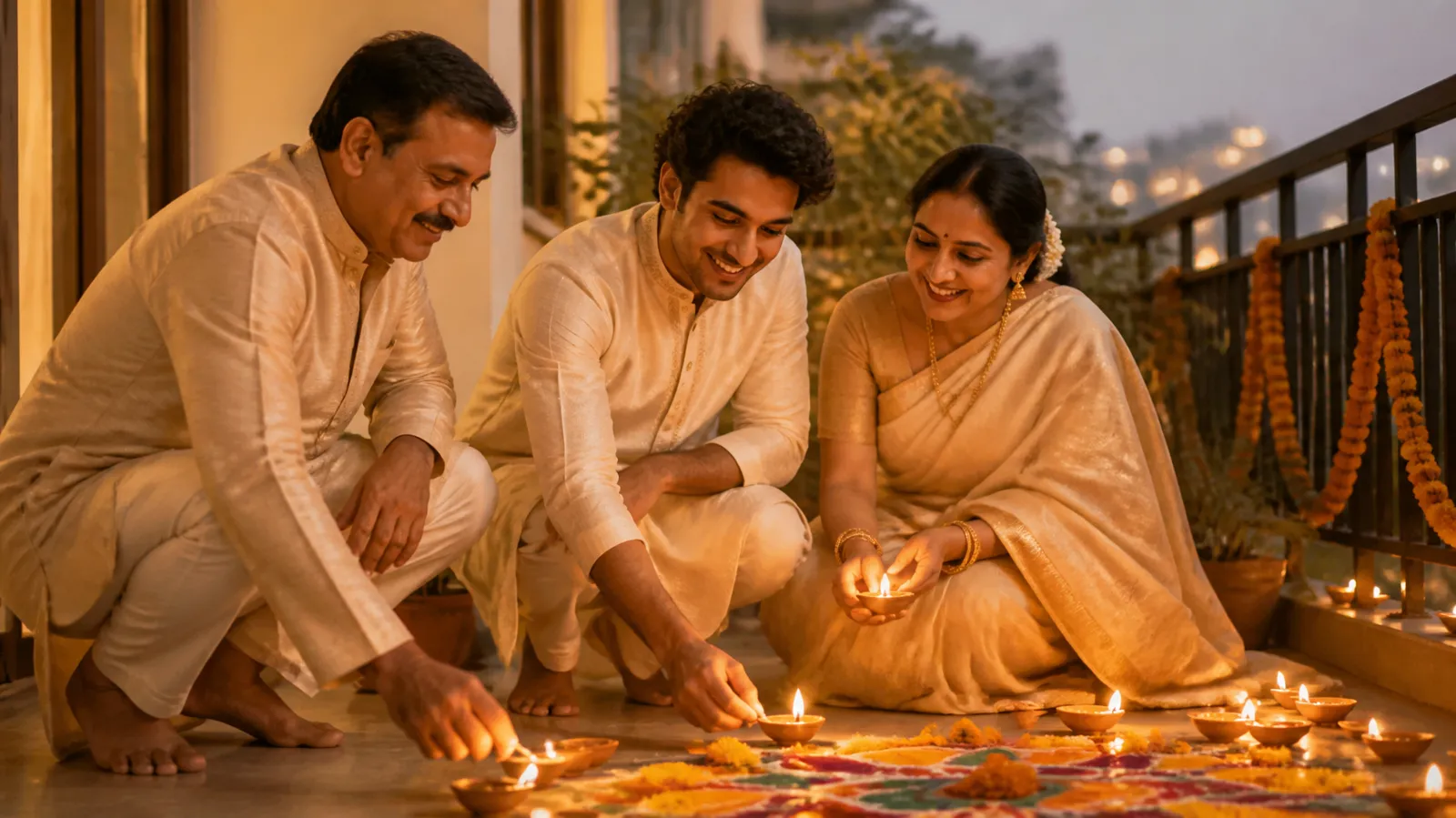
Diwali is the festival of Lakshmi, the festival of abundance. But think about what we actually do before Diwali. We clean our homes. We throw away what is broken. We open the windows and light the lamps.
In a way, our traditions already teach us the secret: first we clear, then we welcome. We don't invite Lakshmi into a cluttered, dark house.
The same is true inside us. Before we can welcome more money, we need to clear the old fear, guilt and scarcity we carry about it. This Diwali, along with cleaning your home, you can clean your money feelings too.
A 10-minute money gratitude practice
This is the one practice I suggest you start tonight, on Diwali. It works on feelings, not just words.
Research on gratitude supports it. In one well-known study described by Harvard Health, people who wrote down what they were grateful for each week felt more optimistic and more satisfied with their lives after 10 weeks than people who wrote about daily irritations.
Here is how to do it. Every night, take a notebook and:
- Write 3 things money did for you today. Small ones count: the vegetables you bought, the fuel in your scooter, the fees that got paid, the cup of chai you enjoyed.
- Next to each, write "Thank you." Feel it for a moment. Notice that money has been supporting you all along.
- Write one money worry, just as it is. No judgement.
- Write one kind sentence back to that worry. For example: "I am learning to feel safe with money." or "I am allowed to receive."
- Close your eyes for one minute and imagine yourself in a home full of Diwali light, feeling calm and grateful about money.
Do it every night for 21 days. Many people find that the panic around money becomes quieter, and they start to notice money coming in, not only going out.
Imagine a young professional who does this for two weeks. One evening, instead of feeling the usual knot while paying a bill, she quietly thinks, "Thank you for the electricity that kept my home running this month." The bill is the same. Her feeling about it has changed. That is the shift.
Small daily habits that raise your money frequency
- Say thank you when you pay, not only when you receive.
- Look at your bank balance calmly once a week, instead of avoiding it.
- Receive gracefully. When someone gives you a gift or a compliment, just say "Thank you."
- Spend on yourself without explaining it once in a while.
- Keep your wallet and your money space clean and organised.
- Stop saying "we can't afford it" automatically. Try "Let me see how I can make this possible."
What changes when your money frequency rises
When the fear around money softens, your actions change without force. You check your accounts calmly. You ask for the fee you deserve. You notice opportunities you would have ignored before. You stop pushing money away with guilt.
And then the affirmations start to feel true, because your feelings finally agree with your words.
There is no guarantee of a particular financial result. But a calmer, more grateful relationship with money helps you make clearer choices, and that is where real change begins.
If you find it hard to say no when money or time is asked of you, you may also like my post on why it is so hard to say no.
References
- NHS Every Mind Matters. Money worries and mental health
- Harvard Health Publishing. Giving thanks can make you happier
This article is for general wellness and education only. It is not financial or medical advice. For decisions about loans, debt, investments or taxes, please speak to a qualified financial adviser. If money worries feel overwhelming, please reach out to a mental health professional; in India you can call Tele-MANAS on 14416. Read the full Medical & Wellness Disclaimer.
Frequently asked questions
Why is my manifestation not working?
Usually because the words and the feelings don't match. If you say "I am abundant" but feel fear or guilt about money, the feeling wins. Work on the feeling first, and the words begin to feel true.
What is money frequency?
It is a spiritual way of describing the feelings and beliefs you carry about money. Fear, guilt and scarcity feel like a low frequency; gratitude, safety and ease feel like a high one. It is about your inner state, not a scientific measurement.
How can I raise my money frequency quickly?
Start with gratitude for what money already does for you, every day. Notice and gently question your money fears. Small, steady practice works better than one big ritual.
How do I attract money this Diwali?
Treat Diwali as a time to clear and welcome. Along with cleaning your home, clear old money fears and guilt, and begin a nightly money gratitude practice. Combine it with practical steps like a budget and savings.
Can manifestation replace financial planning?
No. Inner work helps you make calmer, clearer decisions, but you still need a budget, savings and, when needed, advice from a qualified financial adviser. Both work best together.
Start today
Tonight, on Diwali, before you sleep, write down three things money did for you today, and say thank you to each. It takes two minutes. Keep doing it every night, and notice how your feeling about money begins to change. Happy Diwali, and may your home and heart be full of light.
Did this post help you? Share your thoughts, ask me a question or connect with me on WhatsApp.
This post is for education and emotional wellbeing. It is not medical advice. Read the Medical & Wellness Disclaimer.