
 Money
Money Blocks: 5 Hidden Beliefs That Keep Money Away
Most money blocks are not about how much you earn. They are old beliefs, picked up quietly in childhood. Here are five of the most common ones, and how to begin letting them go.
For years, I believed my relationship with money was simple. I worked hard, I earned, I managed. Only when I began looking inward did I see how many old beliefs were quietly deciding what I spent, what I saved, what I asked for and what I allowed myself to receive.
I see the same thing in almost everyone I work with. Doctors, teachers, business owners, homemakers. People who earn well and people who are struggling. The amount in the bank is different. The beliefs underneath are surprisingly similar.
A money block is not a lack of money. It is a belief about money that was learnt so early, it feels like the truth. And because it feels like the truth, we never question it.
Where money beliefs really come from
Nobody sits a child down and says, "Here is what you should believe about money." Children learn by watching.
They watch who eats last. They watch who gets new clothes and who wears the old ones at home. They watch what happens to a parent's face when a bill arrives. They notice which topics are welcome at the dinner table and which ones are met with silence.
By the time we are adults, these lessons have become a quiet inner rulebook. We follow it without knowing it exists.
Here is something that surprised me. Scarcity is not always about a lack of money. I have seen students from comfortable families live as if they had nothing: borrowing a pen instead of buying one, skipping the snack, asking parents for as little as possible. Their parents could easily afford it. The scarcity was not in the bank. It was in the mind.
That is why a money block can stay with someone even after they start earning well.
5 hidden beliefs that keep money away
As you read, notice which ones feel familiar. You may recognise one, or all five.
1. "Others first, me last."
In many homes, a mother quietly takes the smaller glass of milk so her child can have the full one. She wears faded clothes at home and saves the good ones for going out. It comes from deep love. But a child watching this learns something too: good people put themselves last.

As adults, these are the people who buy gifts for everyone and feel guilty buying one thing for themselves. Spending on yourself starts to feel selfish, even when you can afford it.
2. "You can give or spend only when there is plenty left over."
Many of us heard some version of this: first have a lot, then you can enjoy or share. The problem is that "a lot" never arrives, because the goalposts keep moving. There is always a reason to wait. Joy, generosity and rest get postponed to a future that never quite comes.
3. "We don't talk about money."
In many families, money was a closed topic for children. Studies were welcome. Money, property and marriage were not. Or money was managed by one person, with hours of careful accounts, and everyone else stayed away.
A child in that home may grow up believing that money is complicated, heavy and not for them. As adults, they avoid looking at their accounts, hand over all money decisions to someone else, or feel anxious paying large amounts on their own. Some are told, "Never invest, you will lose it," and the fear stays for decades.
4. "Money only comes through very hard work."
Mehnat ki kamaai hai, kahin nahin jayegi. I have said this myself. Hard work is a value I respect. But when the belief becomes "money can only come through struggle," something else happens. We trade our time, our rest, our family time and our health for every rupee. Some people even begin to feel that whenever they earn more, their health goes down.
I am not saying money causes illness. I am saying that a belief like "money must cost me something" can keep us working in ways that wear us out.
5. "Receiving is not for me."
This is the quietest block, and often the strongest. These are the givers. They lend, help, gift and support, and feel uncomfortable when anything comes back. Asking to be paid fairly feels shameful. Some have even asked for fair payment, been met with anger, and found themselves saying sorry.
If you always give and never allow yourself to receive, money, support and even love find it hard to flow towards you.
Those were just incidents. My mind does not need to build a whole life story around them.
What I have learnt from my own healing
When I began working on my own money beliefs, I realised that most of them were feelings of scarcity, of "not enough" and "not good enough". My mind had created whole stories around a few incidents from the past.
Those were just incidents. They do not have to decide my future.
Today, I remind myself: I am enough. I have enough. I will have enough, till my old age and till my last breath. I am allowed to live a rich and satisfied life. A lot of this healing has already happened, and it continues every day.
I share this because healing money blocks is not about blaming anyone. Our parents and families did their best with what they knew. Most of them grew up with far less than we have. Their beliefs kept them safe in their time. We can thank those beliefs, and still choose new ones.
Try this: a 10-minute money belief check
You need a notebook, a pen and ten quiet minutes. Writing matters here. When an old belief is on paper, in front of your eyes, it loses some of its power.
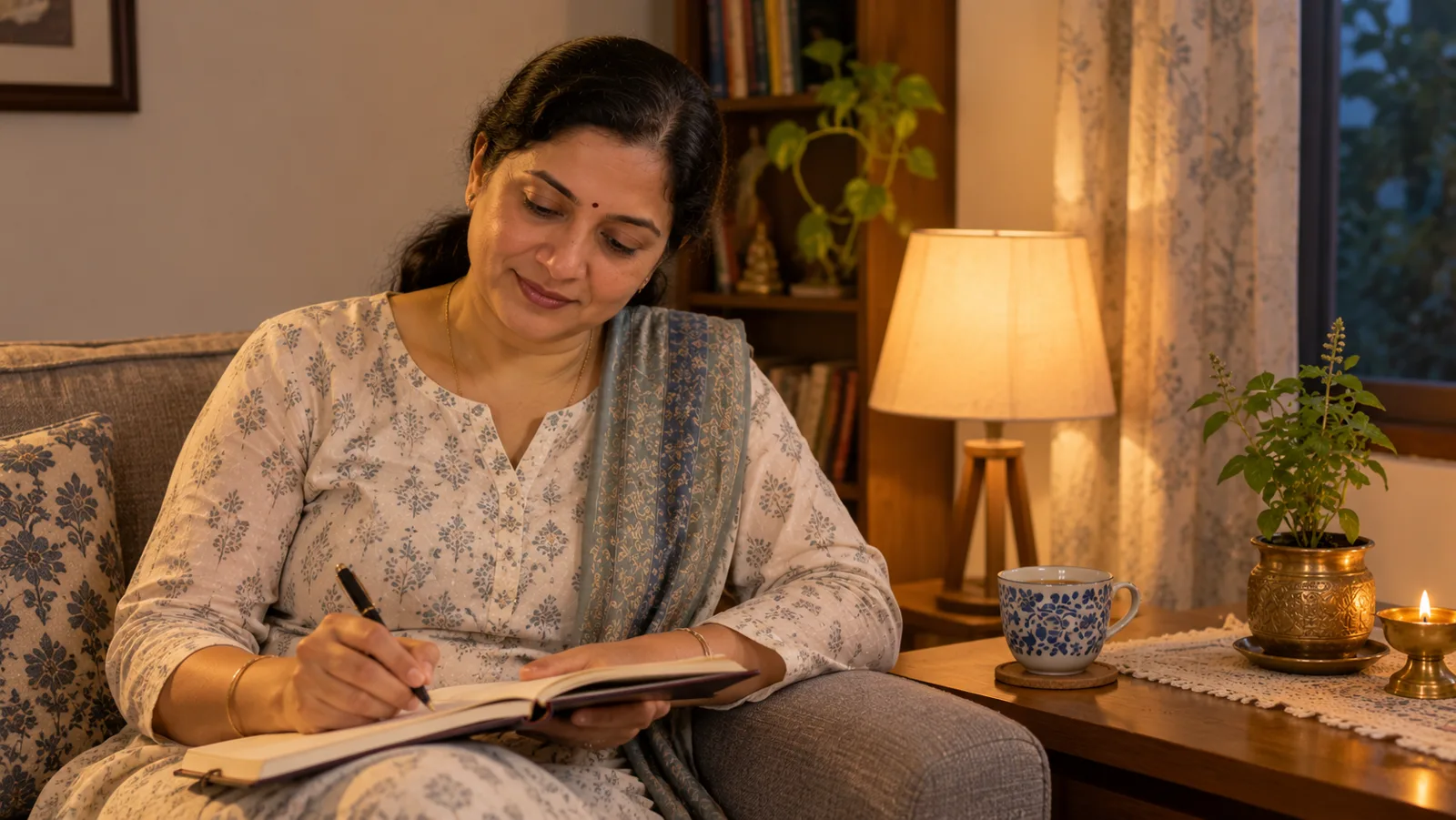
Here are the five steps:
- Write down 5 sentences about money you heard growing up (3 minutes). Write them in the exact words, in any language. For example: "Money doesn't grow on trees." "We can't afford it." "Rich people are not good people."
- Ask "Whose voice is this?" (2 minutes). Next to each sentence, write who you heard it from. Notice that it was never your own idea.
- Rate how true it still feels (1 minute). Give each one a number from 0 to 10.
- Clear the feeling with Ho'oponopono (3 minutes). Take the belief with the highest number. Put a hand on your heart and say slowly to the feeling it brings: "I'm sorry. Please forgive me. Thank you. I love you."
- Write one gentle new sentence (1 minute). Not a big affirmation your mind will argue with. A small, believable one, like: "I am learning that it is safe to spend on myself."
Then take one small action this week that matches your new sentence. Buy yourself one thing without explaining it to anyone. Pay a bill yourself. Accept a compliment or a gift with only "thank you". Small actions teach the mind faster than big promises.
Signs a money block is running your life
You may notice:
- You feel guilty after spending on yourself, even small amounts.
- You work very hard, but money doesn't seem to stay.
- You find it hard to ask for a raise, charge your worth or ask for money owed to you.
- You avoid checking your bank balance or making money decisions.
- You feel uneasy when someone gives you a gift or offers to pay.
- You worry about old age, even when you are doing fine today.
None of these mean something is wrong with you. They are simply signs of an old belief asking to be seen.
What changes when you start
People often expect a sudden shift. In my experience, it is gentler. The guilt after spending becomes a little lighter. You catch the old voice sooner. You say "thank you" instead of "oh, you shouldn't have". You start to ask for what you deserve, a little more calmly each time.
The money itself may not change overnight. But the way you relate to money starts to change, and that is where everything else begins.
Frequently asked questions
Is a money block real, or is it just in my head?
It is a belief, so yes, it lives in the mind. But beliefs shape real choices: what you spend, save, charge and accept. That is why working on them can make a real difference to how you handle money.
Do I have to blame my parents to heal this?
No. Most families passed on what they learnt in harder times. You can understand where a belief came from, feel compassion for everyone involved, and still choose a new one.
Will this make me rich quickly?
No, and please be careful of anyone who promises that. This practice helps you clear old feelings and make calmer, clearer money decisions. Change comes with steady practice.
Does this replace financial advice?
No. For investments, loans, taxes or debt, please speak to a qualified financial adviser. Inner work and practical advice work best together.
Start today
Pick one belief from this post that felt familiar. Write it down tonight, ask whose voice it is, and say the four lines to the feeling. One honest look at an old belief is often the first real step towards a new relationship with money.
This post is for education and emotional wellbeing. It is not medical advice. Read the Medical & Wellness Disclaimer.