
 Relationships
How to Forgive Someone Who Never Said Sorry

Waiting for an apology that may never come keeps the hurt alive. Learn what forgiveness really is, what research and ancient wisdom say, and a 15-minute REACH practice to begin letting go.
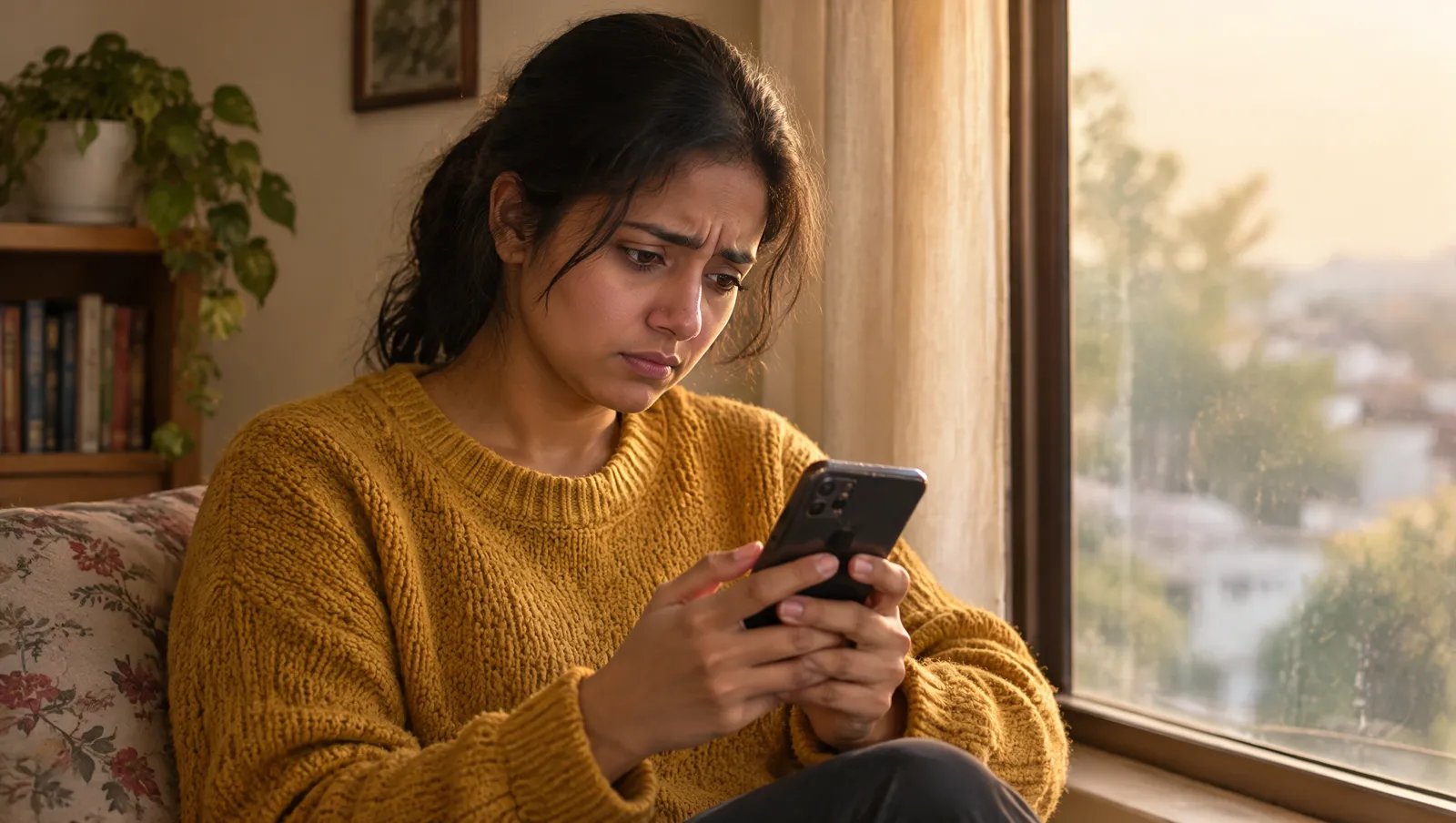
Someone hurt you. Maybe it was a parent, a partner, a friend or a boss. You have replayed it many times. You have imagined the conversation where they finally say, "I am sorry. I was wrong."
But that day never comes.
If you are wondering how to forgive someone who never said sorry, this post is for you. You will learn what forgiveness really is (and what it is not), what modern research and ancient wisdom say about it, and five gentle steps you can begin today, without waiting for anyone.
Can you forgive someone who never apologised?
Yes. Forgiveness is something you do inside yourself, so it does not need the other person's apology, agreement or even awareness. It means slowly letting go of resentment and the wish to hurt them back. It does not mean saying what they did was okay, and it does not mean you must trust them again.
Waiting for an apology is like waiting at a bus stop for a bus that stopped running years ago. You can keep waiting. Or you can start walking home.
What forgiveness is not
Many people refuse to forgive because they think forgiveness means something it doesn't. Forgiveness is not:
- Saying it was okay. What happened was wrong. Forgiving doesn't change that.
- Forgetting. You may always remember. The memory just stops burning.
- Reconciling. You can forgive someone and still keep your distance. If someone is still hurting you, your safety comes first.
- Being weak. It takes far more strength to let go than to hold on.
- A one-time event. Deep hurts are usually forgiven slowly, layer by layer.
Holding resentment is like holding a hot coal, waiting for the right moment to throw it at someone. All that time, it is your own hand that burns.
Signs you are still carrying an old hurt
Ask yourself gently:
- Do you feel a tight chest or a hot face when you think of this person?
- Do you replay the same conversation in your head, again and again?
- Do you tell the story often, and feel the anger as if it happened yesterday?
- Do you secretly wish something bad would happen to them?
- Do you find it hard to trust new people because of what this person did?
- Do you feel stuck, as if part of your life is on pause until they say sorry?
If you said yes to two or more, you may be carrying a weight that no longer needs to be yours.
What modern research says
Forgiveness has been studied seriously for more than 30 years. The overall message is clear and hopeful: forgiveness can be learnt, and it is good for the mind.
- Forgiveness can be learnt. A large review combined 54 studies with more than 2,300 people. Those who went through a forgiveness program forgave much more than those who didn't, and they also had less depression and anxiety, and more hope (Wade et al., 2014).
- It lowers stress and anger. A review of controlled trials found that forgiveness therapy reduced depression, anger, and stress and distress, and increased positive feelings (Akhtar & Barlow, 2018).
- Less stress, better mental health. In a 5-week study of 332 adults aged 16 to 79, people whose forgiveness grew felt less stressed, and lower stress was linked with fewer mental health symptoms (Toussaint et al., 2016).
- It works in India too. In a study at Karnatak University with 124 college students, a short group program based on the REACH steps (the same practice you will learn below) led to large gains in forgiveness, more positive feelings and higher self-esteem, compared with students who were still waiting for the program (Toussaint et al., 2020).
Most of these studies measure feelings and stress, not physical illness, and results vary from person to person. But the direction is consistent across cultures: letting go of a grudge helps the person who lets go.
What ancient wisdom says
Our traditions understood this long before research did. In the Bhagavad Gita, Krishna lists forgiveness among the qualities of a divine nature:
Tejaḥ kṣamā dhṛtiḥ śaucam adroho nāti-mānitā, bhavanti sampadaṁ daivīm abhijātasya bhārata. (Bhagavad Gita 16.3)
My simple meaning: strength, forgiveness, courage, purity, freedom from ill-will and freedom from pride are the treasures of a divine nature. (Checked against standard English translations.)
Notice that kṣamā, forgiveness, sits right next to tejaḥ, strength. In this verse, forgiveness is not weakness. It is a sign of inner power.
The Buddha said something very similar in the Dhammapada:
Na hi verena verāni sammantīdha kudācanaṁ, averena ca sammanti, esa dhammo sanantano. (Dhammapada 5)
My simple meaning: hatred never ends through hatred. It ends only through non-hatred. This is an eternal law.
This wisdom comes from Indian traditions and is open to people of every faith, or none.
Why the apology may never come
Sometimes people don't apologise because they are proud. Sometimes they truly don't see the hurt they caused. Sometimes they carry so much guilt and pain of their own that they cannot face it. And sometimes they are no longer alive.
Imagine a young woman who waited years for her elder sister to apologise for harsh words said at a family wedding. The sister never did. One day, the young woman realised she had spent more hours thinking about that one evening than her sister ever had. The apology was never coming. Her peace had to come from somewhere else.
This is the turning point: your healing does not have to wait for their understanding.
If you find it hard to stand up for yourself in the first place, my post on how to say no without guilt may help you set boundaries, so new hurts don't pile up.

A 15-minute REACH forgiveness practice
This is the one practice for this post. It is based on the REACH method by psychologist Everett Worthington, the same steps used in the Indian college study above. Take a notebook and a quiet 15 minutes. Choose a small or medium hurt to begin with, not the biggest one of your life.
- R: Recall the hurt (3 minutes). Write what happened, plainly, as if you were a fair reporter. Don't call yourself a victim or call them a villain. Just the facts, and how it felt.
- E: Empathise (3 minutes). Write a few lines from their side. What might have been going on in their life? What pain or fear could have made them act that way? This does not excuse them. It only helps you see them as a human being, not a monster.
- A: Altruistic gift (2 minutes). Remember one time when you hurt someone and they forgave you. How did that feel? Now write: "I choose to give this same gift, for my own peace."
- C: Commit (2 minutes). Write one clear sentence, such as "Today, I choose to begin forgiving [name] for [the hurt]." Sign and date it.
- H: Hold on (5 minutes, and later). Old feelings will come back. That doesn't mean you failed. When the anger returns, read your sentence again and remind yourself: "I have already decided. I am still forgiving."
Some people like to end by writing a short letter to the person that they never send, and then tearing it up or keeping it in a drawer.
If the hurt involves abuse, violence or deep trauma, please do this work with a counsellor or therapist, not alone.
Small daily habits that help you let go
- Limit the replay. When you catch yourself retelling the story in your head, say "Stop. I am free," and turn to something in front of you.
- Tell the story less. Each time we tell it, we live it again. Choose one trusted person, and then rest the story.
- Wish them well, even a little. Silently say, "May you find peace," even if you don't fully mean it yet.
- Notice the gifts. Ask, "What did this hurt teach me about my own strength or boundaries?"
- Forgive yourself too. Often, we are angriest at ourselves for allowing it.
For a gentle daily practice of letting go, try my 5-minute Ho'oponopono practice. And if you have been pushing your anger away instead of feeling it, my post on why positive thinking is not working explains why feelings need to be felt before they can be released.

What changes when you forgive
Forgiveness is rarely a single moment of relief. It is more like slowly putting down a heavy bag you didn't realise you were carrying. Many people find that, over weeks or months:
- the memory still exists, but it no longer controls their mood;
- they sleep and focus better, with less replaying;
- they feel less afraid of being hurt again, because they trust their own boundaries;
- they have more energy for the people who truly care for them.
There is no fixed timeline and no guarantee. Some days you will feel free, and some days the old hurt will knock again. That is normal. Each time you choose peace again, the knock gets softer.
References
- Wade NG, Hoyt WT, Kidwell JEM, Worthington EL Jr (2014). Efficacy of psychotherapeutic interventions to promote forgiveness: a meta-analysis. Journal of Consulting and Clinical Psychology, 82(1), 154-170. https://doi.org/10.1037/a0035268
- Akhtar S, Barlow J (2018). Forgiveness therapy for the promotion of mental well-being: a systematic review and meta-analysis. Trauma, Violence, & Abuse, 19(1), 107-122. https://doi.org/10.1177/1524838016637079
- Toussaint L, Shields GS, Dorn G, Slavich GM (2016). Forgiveness, stress, and health: a 5-week dynamic parallel process study. Annals of Behavioral Medicine, 50(5), 727-735. https://doi.org/10.1007/s12160-016-9796-6
- Toussaint L, Worthington EL Jr, Cheadle A, Marigoudar S, Kamble S, Büssing A (2020). Efficacy of the REACH Forgiveness intervention in Indian college students. Frontiers in Psychology, 11. https://doi.org/10.3389/fpsyg.2020.00671
- Bhagavad Gita 16.3.
- Dhammapada 5.
This article is for general wellness and education only. It is not medical advice. If the hurt involves abuse, violence or trauma, or if anger or sadness affects your daily life, please speak to a counsellor, doctor or mental health professional; in India you can call Tele-MANAS on 14416. Read the full Medical & Wellness Disclaimer.
Frequently asked questions
How do you forgive someone who never said sorry?
Remember that forgiveness happens inside you and doesn't need their apology. Write down what happened, try to understand their side without excusing it, decide to forgive, and gently hold that decision when old feelings return.
Does forgiving someone mean I have to let them back into my life?
No. Forgiveness and reconciliation are different. You can forgive someone and still keep a healthy distance, especially if they continue to hurt you.
Does forgiveness mean forgetting?
No. You may always remember what happened. Forgiveness means the memory stops controlling your feelings and your day.
What does research say about forgiveness?
Reviews of many studies show that forgiveness can be learnt, and that forgiveness programs reduce depression, anxiety, anger and stress. A study in India found similar benefits for college students.
How long does it take to forgive someone?
It varies. Small hurts may ease in days. Deep hurts are usually forgiven slowly, layer by layer, over months. Research suggests longer, steady practice helps more.
Start today
Tonight, take one small hurt you are still carrying. Write one line about what happened, one line about what the other person might have been going through, and one sentence: "Today, I choose to begin forgiving." You don't have to feel it fully yet. The decision is the first step.
Did this post help you? Share your thoughts, ask me a question or connect with me on WhatsApp.
This post is for education and emotional wellbeing. It is not medical advice. Read the Medical & Wellness Disclaimer.